
Shoulder Arthritis
It is often warranted to try conservative treatments (non-surgical) for shoulder arthritis. This will include resting the shoulder or modifying activities that make the pain more severe.
The use of non-steroidal anti-inflammatory medications such as ibuprofen or naproxen can help with pain by reducing the inflammatory component of arthritis.
In addition, physical therapy can help improve range of motion and functional use of the shoulder. Furthermore, using dietary supplements such as glucosamine and chondroitin has helped some patients manage their symptoms.
The First Sign of Shoulder Arthritis
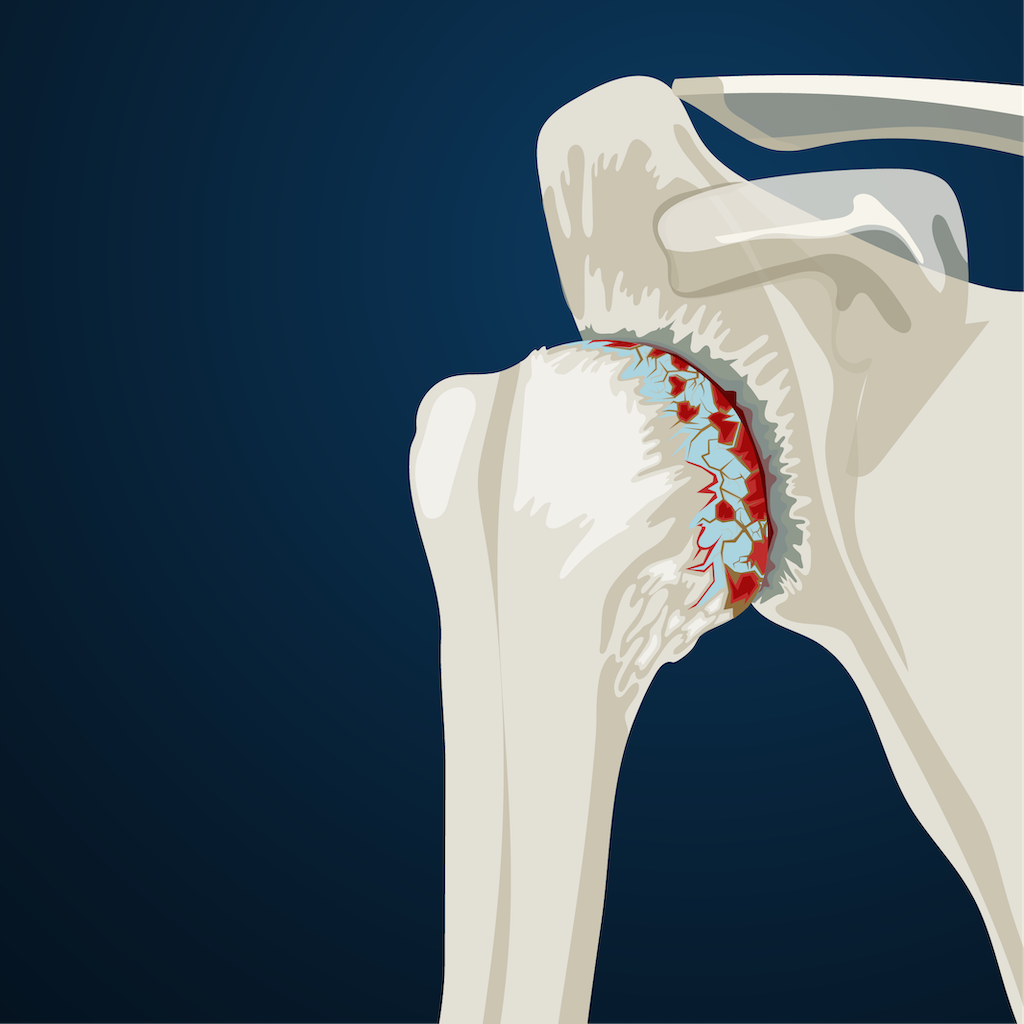
The first sign of shoulder arthritis is pain. Shoulder arthritis is a condition where the cartilage deteriorates and becomes rough as the cartilage begins to break up and wear down. As a result, the joint loses its smooth gliding and becomes painful with motion.
Articular cartilage is the material that covers the ends of the bones where they contact to become a joint. It is a very durable material that provides a smooth and impact-resistant surface. This allows the bones to glide over one another during the joint’s range of motion.
Types of Arthritis That Lead to Joint Deterioration
Osteoarthritis (Degenerative Arthritis)
This is the most common type of arthritis and usually results from age-related degeneration of the cartilage. People affected with osteoarthritis are most commonly over 50 years of age. As we age, the structure of the cartilage changes, and it loses its ability to withstand the stress of joint forces.
This type of arthritis is progressive and usually worsens over time. As arthritis progresses, bone spurs may develop, and the joint becomes painful with motion or lifting. Moreover, it can progress to severe pain at rest. Night pain is also very common in arthritis of the shoulder.
Post Traumatic Arthritis
This condition is very similar to osteoarthritis, but the onset is secondary to a traumatic event that initiates damage to the cartilage surface. For example, this may occur after a traumatic shoulder dislocation, a severe fall onto the shoulder, or a fracture. Patients affected by post-traumatic arthritis are typically much younger.
Inflammatory Arthritis
This type of arthritis occurs as a result of autoimmune disorders where the immune system attacks and destroys the cartilage. Common forms of this disease include Rheumatoid Arthritis, Systemic Lupus Erythematosus, or Seronegative Arthritis. These patients can be of any age but are typically younger.
Symptoms of Shoulder Arthritis
Shoulder arthritis typically presents with a gradual onset of pain, initially as a minor ache or soreness that worsens with activity or vigorous shoulder use. This pain often becomes more pronounced at night, frequently disrupting sleep and contributing to overall discomfort.
As the condition progresses, the pain intensifies, becoming more persistent and severe, eventually impacting daily activities and limiting the shoulder’s functionality. In advanced stages of shoulder arthritis, the pain is accompanied by a significant loss of range of motion.
Patients may experience stiffness, making it difficult to perform routine tasks that involve lifting or reaching. As arthritis reaches its “end stage,” mechanical symptoms such as catching, grinding, or a grating sensation within the shoulder joint become more noticeable. These symptoms reflect the deterioration of joint surfaces and cartilage, which can severely impact quality of life.
Diagnosis
To diagnose arthritis, Dr. Jones will obtain a detailed history of your condition and perform a physical exam. During the exam, he will assess your active range of motion, passive range of motion, and strength. In addition, he will feel, or palpate, the joint for areas of tenderness or crepitation (grinding) during motion.
Next, diagnostic studies are used to evaluate the shoulder. X-rays usually confirm the diagnosis. However, more advanced imaging such as MRI or CT scans may be needed to fully define the problem.
Non-Operative Treatment
Conservative treatment is typically the first approach for shoulder arthritis. This may involve resting the joint or adjusting activities that increase discomfort.
Non-steroidal anti-inflammatory medications like ibuprofen or naproxen can help manage inflammation and ease pain, while physical therapy supports better mobility and shoulder function.
Some patients also find that supplements such as glucosamine and chondroitin contribute to improved comfort and flexibility.
Surgery for Shoulder Arthritis
When conservative measures fail or if damage to the bone is severe, surgery may be considered. The recommended approach depends on several factors, including the severity of arthritis and the patient’s age.
For younger patients (under 50) or those with less advanced arthritis, arthroscopy may be an option. In this minimally invasive procedure, the surgeon places a small camera inside the joint to inspect it for damage. Using specialized instruments, the rough cartilage surfaces can be smoothed, bone spurs can be removed, and scar tissue can be cleared to improve motion and reduce discomfort.
In more advanced cases, shoulder joint replacement may be performed. During this procedure, the joint surfaces are replaced with metal and plastic components to create a smoother surface for movement. Dr. Jones notes that many patients experience improved range of motion and function following recovery.
While there are approximately 1.15 million hip and knee replacements performed in the United States each year, there are only approximately 174,000 to 350,000 shoulder replacements performed annually. Because shoulder replacement is a technically demanding procedure, Dr. Jones emphasizes the importance of having it done by an experienced surgeon. He has a strong professional focus on this procedure and has completed many shoulder replacements with consistent results.
If you are experiencing symptoms of shoulder arthritis and would like to be evaluated, please contact Dr. Jones’s office for an appointment.
