
Lateral Epicondylitis (Tennis Elbow)
Elbow Anatomy
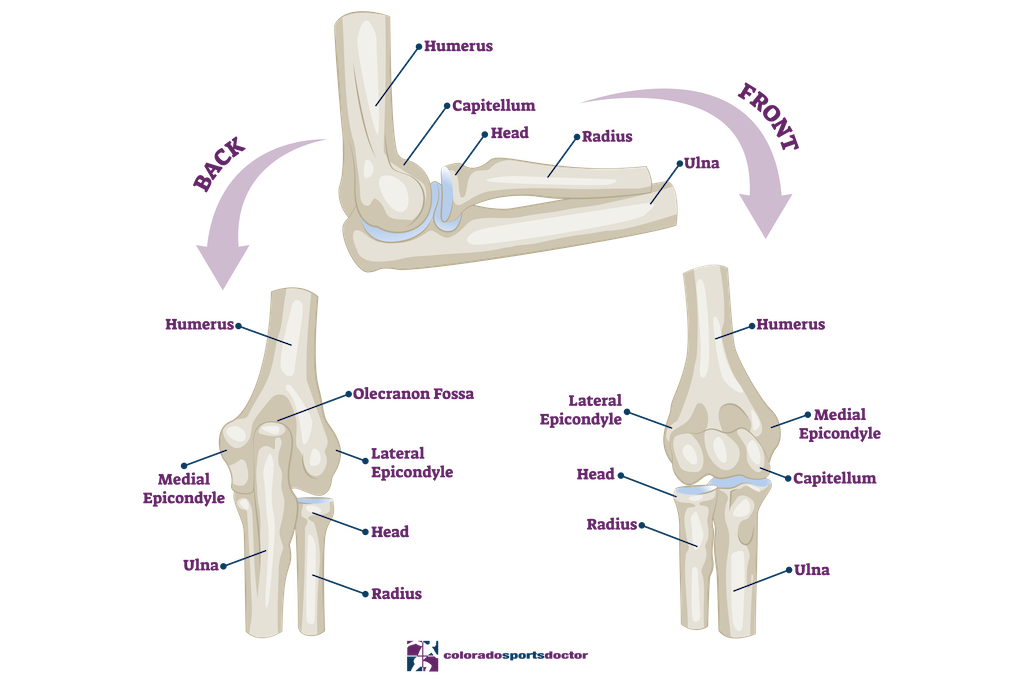
The elbow joint connects the humerus, ulna, and radius bones and allows the arm to move with a hinge-like motion. The lateral epicondyle is a small bony projection on the outer part of the humerus. It is the attachment site for the tendons of the forearm muscles that extend the wrist and fingers.
These muscles are responsible for gripping and lifting, and they are active during activities such as tennis, carpentry, and using a computer mouse. Continuous or repetitive use of these muscles can cause small tears in the tendons, which leads to tissue irritation and inflammation. This condition is known as lateral epicondylitis, or “tennis elbow.”
Understanding Tennis Elbow
Lateral epicondylitis occurs due to degenerative changes in the tendons that attach to the lateral epicondyle. It is a common condition among athletes, especially tennis players. However, it can also develop in anyone who frequently uses their forearm muscles, including carpenters, gardeners, and painters.
The most common symptoms include pain or tenderness on the outer side of the elbow and reduced grip strength. In more severe cases, pain can extend toward the wrist and forearm, making daily tasks difficult. Because of this, early evaluation is helpful to prevent worsening of the condition.
Treatments
Conservative Treatments
Conservative or non-surgical treatments are often recommended first for tennis elbow. Resting the arm, applying ice, and taking nonsteroidal anti-inflammatory medications can help reduce pain and swelling. In addition, physical therapy can help strengthen and stretch the forearm muscles, which reduces stress on the affected tendon.
A counterforce brace or strap can also help by lessening tension on the tendon during activity. If these measures do not relieve symptoms, a corticosteroid injection may be considered to reduce pain and inflammation.
Non-Surgical Treatments
There are several treatment options available that do not involve surgery. These include rest, ice, anti-inflammatory medications, stretching, and progressive strengthening. Many patients are referred to physical therapy for guided exercise programs and treatments such as ultrasound, iontophoresis, or friction massage.
A counterforce brace is often recommended to reduce stress during activity. When symptoms are persistent, your doctor may suggest a cortisone injection to relieve acute pain. This injection can also encourage a short-term healing response through a percutaneous release technique.
Surgical Treatments
When non-operative care does not improve symptoms, surgery may be an option. The goal of surgery is to remove damaged tissue and repair the tendon. This can be done through a traditional open approach or arthroscopically, depending on the specific case.
Before surgery, Dr. Jones will review your options and recommend a plan based on your condition. After the procedure, you may need to wear a splint for about seven to ten days to protect the area. Once this period ends, you can begin gentle motion of your hand, wrist, and elbow while avoiding heavy activity for about six weeks.
Around that time, a gradual strengthening and conditioning program begins. Most patients regain function and comfort within four to six months.
Recovery
Successful recovery requires patience and consistent follow-up. Healing after tennis elbow surgery usually takes four to six months. Initially, the arm may be placed in a splint or sling to support healing. Once the sutures and splint are removed, physical therapy begins.
Patients start with gentle range-of-motion exercises and progress to strengthening over time. The return to regular activities and sports should happen gradually, with guidance from the doctor to avoid re-injury. Throughout this process, Dr. Jones provides personalized care and recommendations to support a smooth recovery.
